Where I come from
I come from Khairpur District in Sindh, from a middle-class family in a rural area where a career in technology was not something you saw around you. Nobody in my circle could tell me which degree to choose, how scholarships worked or what a software engineer actually did all day. I studied engineering at Mehran UET in Jamshoro and worked most of it out the hard way.
That is why students who have no one to guide them hold a special place in my work. The gap between talent and opportunity in Pakistan is mostly a gap in information, and in someone believing in you at the right time. I try to be that someone.
Working from semester one
I started working professionally in my first semester, building mobile apps for international clients while I studied. By graduation I had delivered twenty production apps that real people use every day. Those projects are under confidentiality agreements, so I do not name them here, but they taught me more than any course: how to ship, how to talk to a client in another time zone, and how to keep learning while being paid to deliver.
Representing Google, Microsoft and GitHub
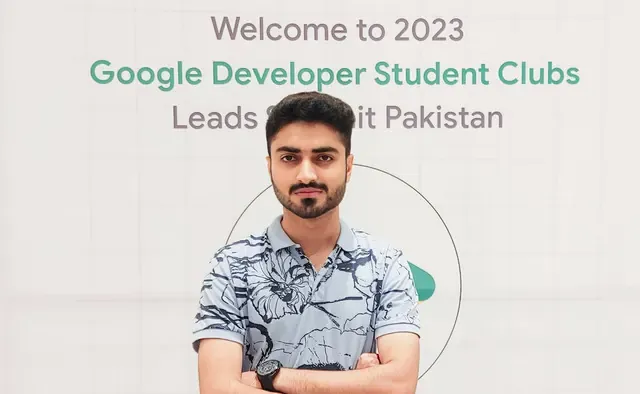
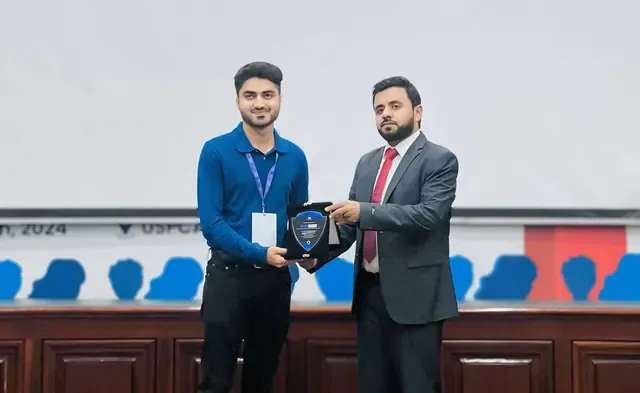
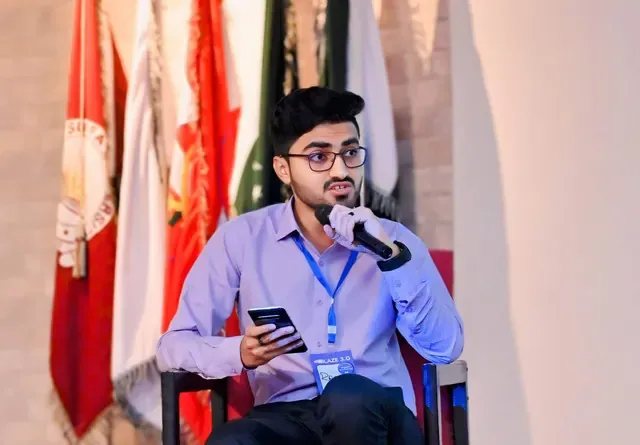
At university I became the Google Developer Student Club lead, led a team of fifty, and doubled the chapter’s reach with more than fifty sessions with industry experts and Google Developer Experts. Answering questions on Stack Overflow turned into a moderator role after my answers had reached hundreds of thousands of people. GitHub made me a Campus Expert, the first from Jamshoro; Microsoft made me a Gold Student Ambassador and later an EMEA Regional Lead.
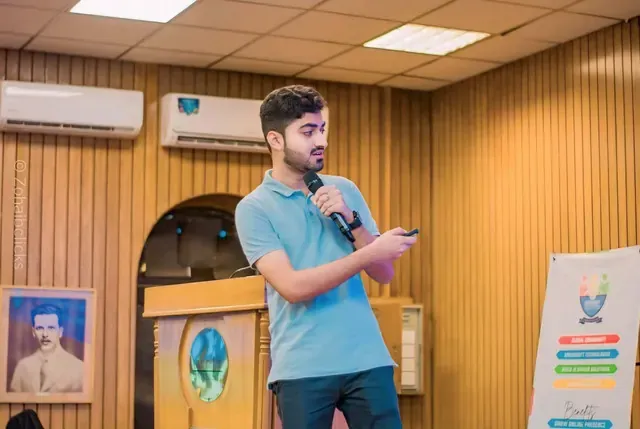
Those years taught me the thing I still believe: people grow fastest when someone a few steps ahead tells them the truth kindly and shows them the next step. That is what DevConnect, the community of 5,000 developers and learners I co-founded, is for, and what two batches of the Bytewise DevOps fellowship were about.
The pivots
My career did not go in a straight line. I moved from mobile development to DevOps and then to DevSecOps, because the problems that interested me moved from the screen to the systems behind it. I enrolled in a master’s in Cybersecurity at FAST and later stepped back from it when I realised it did not align with where I wanted to go. Leaving was harder than enrolling.
Each switch taught me the lesson I now pass on: a plan you have outgrown is not a plan, and changing direction is not failure when you know why you are doing it.
The engineer
The other half of my work is engineering. I am a DevSecOps engineer who likes making complicated things simple: automated pipelines, secure Kubernetes platforms and releases teams can trust. At Pakistan Single Window I build the tooling behind WeBOC, the country’s customs clearance system, where it cut deployment time by up to 90%.
Before that I set up CI/CD for FWU’s FILOS insurance platform and worked on Unilever’s distribution management system, where deployments got about 90% faster. In October 2025 I became a CNCF Kubestronaut, holding all five Kubernetes certifications: KCNA, KCSA, CKAD, CKA, CKS.
Teaching, learning and psychology
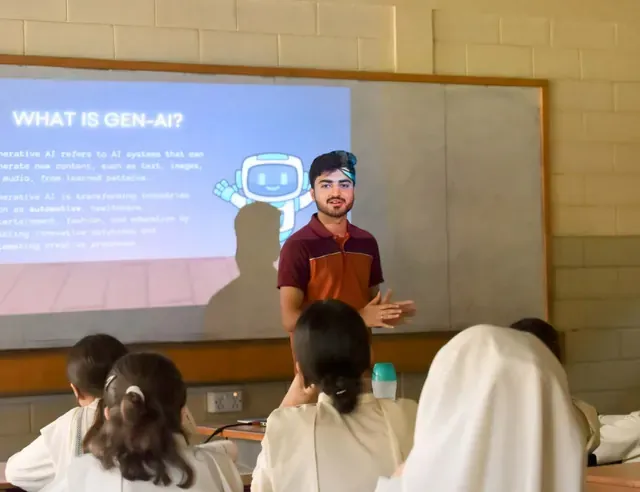
Teaching is my passion and learning is my hobby. Alongside engineering I taught myself psychology and human relations, because the questions people brought me were rarely only technical: how to stay motivated, how to handle family expectations, how to speak up, how to decide. Those readings, and hundreds of conversations, shaped how I coach.
Students who watch my videos or sit in a session tell me they relate first and ask later. That is the point. If my story makes a student from a small town feel that the path is real, part of my job is done before we even speak.
The mentor and coach
Mentorship started informally and became the work I care about most. On Topmate I hold a 4.8/5 rating from 54 booked sessions and the Top 1%, Community Care, People’s Choice and Accelerators ’24 badges. I qualified for the U.S. Department of State’s SUSI programme in 2023, scored 8 in IELTS Speaking and Listening, and I help students with scholarships, IELTS and the applications that open doors.
Life coaching grew out of the same conversations. The questions behind a career question are usually about direction, confidence, habits and the decisions that shape who you become. Sessions are honest, practical and in Sindhi, Urdu or English.
The videos
I make short, honest videos in Sindhi on careers, learning and life: study habits, skills worth learning, confidence and everyday decisions. They have been watched more than 10 million times on Facebook, and the ones worth keeping are collected on the videos page.